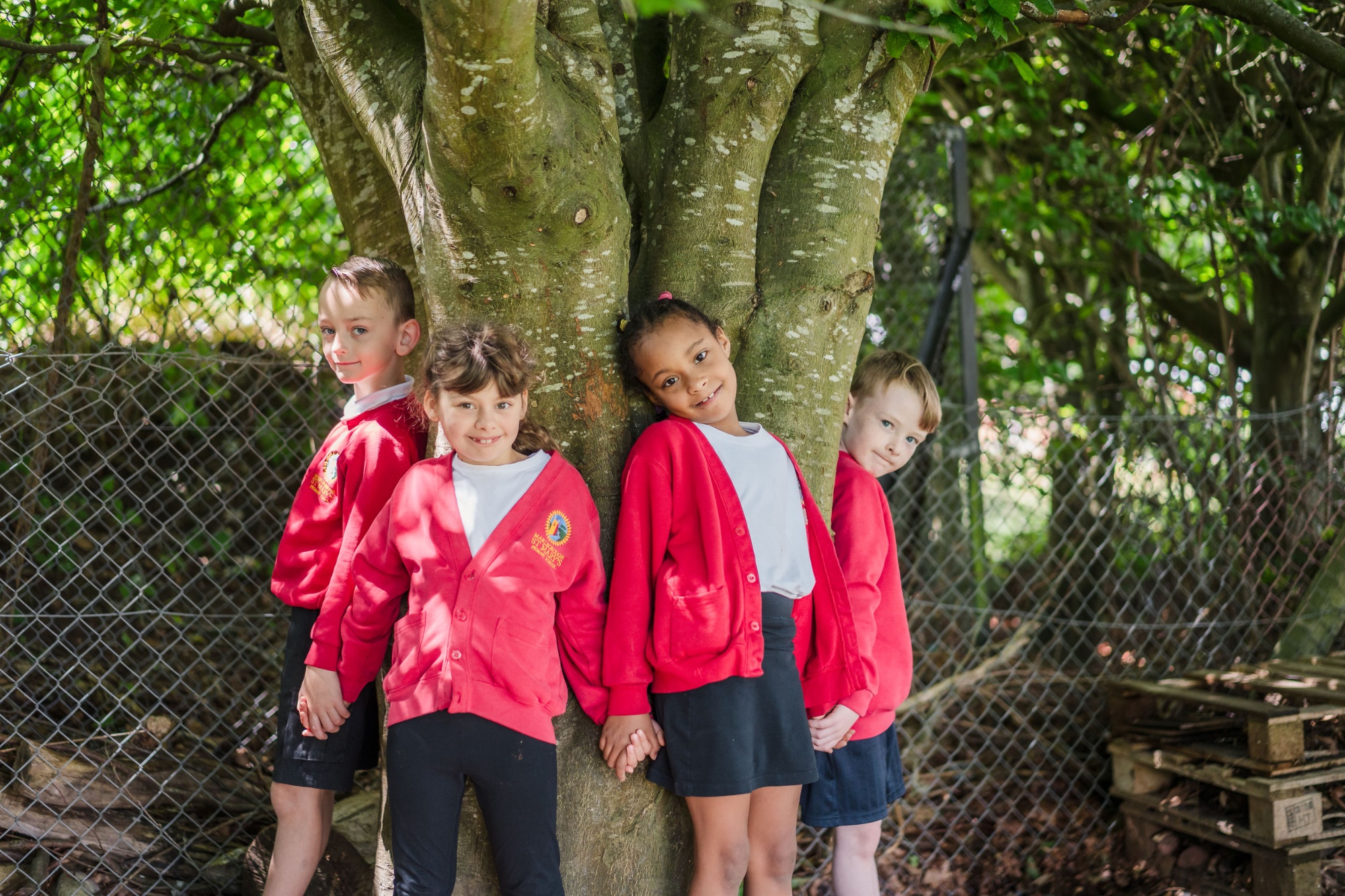
Wellbeing and PSHE
Subject Intent:
At Marlborough St Mary’s, we are committed to providing an outstanding Personal, Social, Health and Economic (PSHE) education that supports every child to flourish. Our intent is to deliver a high-quality, developmental and age-appropriate curriculum that equips all pupils with the knowledge, skills and attributes they need to manage their lives confidently, both now and in the future. Through this curriculum, pupils learn to become thoughtful, responsible and active citizens within their community, able to make positive contributions to society. Central to this intent are our four core drivers — Talk, Read, Connection and Joy — which shape the way our children learn, interact and grow.
We prioritise Talk as a way for pupils to explore ideas, share experiences and build the communication skills essential for healthy relationships and personal wellbeing. Read enhances learning by immersing pupils in carefully chosen texts and resources that deepen their understanding of real-life experiences, broaden their world view and encourage critical thinking. Connection is at the heart of our PSHE intent: we want our children to feel deeply connected — to one another, their families, our school, the local community and the wider world. These purposeful connections, including partnerships with Marlborough College, local businesses and community groups, help children recognise their own place and value in the world around them. Finally, Joy underpins our belief that childhood should be full of happiness. We intentionally design learning and wider school experiences that spark delight, curiosity and a genuine love of learning for its own sake. Through this holistic combination, we aim to nurture confident, resilient and compassionate young people equipped for the challenges and opportunities of life.
Subject Implementation:
Our PSHE curriculum is grounded in our four drivers — Talk, Read, Connection and Joy — which guide the structure and ethos of lessons across Marlborough St Mary’s. These drivers ensure that pupils are not only taught PSHE content but experience it in meaningful, relevant and uplifting ways. Children engage in rich discussion through structured and unstructured talk opportunities, such as think-pair-share, circle-time dialogue and collaborative group tasks. This emphasis on talk allows pupils to build confidence in expressing themselves, to appreciate diverse viewpoints and to recognise the value of their own voice. Disadvantaged learners are especially supported to contribute, enabling them to build self-esteem and a strong sense of belonging.
Reading is woven throughout the curriculum. We use carefully selected texts — fictional, real-world, age-appropriate and reflective — to introduce complex themes and relatable scenarios in a safe and accessible manner. These texts help children make sense of life experiences, support comprehension of PSHE concepts and encourage empathy through the stories of others. In this way, reading enriches the emotional and social development of every child.
Our commitment to Connection is reflected in the curriculum design and in the opportunities provided beyond the classroom. Lessons encourage pupils to consider their relationships, their community roles and the wider world, while whole-school projects, community partnerships and cross-phase activities help pupils to build meaningful connections. Whether through collaboration with Marlborough College, engagement with local care homes or participation in charitable initiatives, pupils come to understand how their actions can positively impact others and how they themselves are valued members of multiple communities.
We also intentionally build Joy into the PSHE experience. Lessons include practical activities, low-stakes tasks and games to connect us designed to make children feel safe, proud and happy in their learning. Teachers plan moments that are deliberately joyful — moments that allow children to smile, laugh, feel seen and enjoy learning simply because it brings them pleasure. This joyful approach boosts engagement and helps children associate PSHE with positivity and personal growth.
The Jigsaw programme provides a clear and progressive structure for teaching all statutory elements of Relationships and Health Education. Lessons are delivered weekly by class teachers and supported through whole-school culture, including assemblies, worship, class charters and everyday interactions. The six Jigsaw units — Being Me in My World, Celebrating Difference, Dreams and Goals, Healthy Me, Relationships and Changing Me — are revisited each year so that learning deepens over time. Each class maintains a floor book that captures key learning, providing pupils with a sense of pride and allowing them to revisit and reflect on their progress.
|
Term |
Puzzle (Unit) |
Content |
|
Autumn 1: |
Being Me in My World |
Includes understanding my own identity and how I fit well in the class, school and global community. Jigsaw Charter established. |
|
Autumn 2: |
Celebrating Difference |
Includes anti-bullying (cyber and homophobic bullying included) and understanding. |
|
Spring 1: |
Dreams and Goals |
Includes goal-setting, aspirations, who do I want to become and what would I like to do for work and to contribute to society. |
|
Spring 2: |
Healthy Me |
Includes drugs and alcohol education, self-esteem and confidence as well as healthy lifestyle choices, sleep, nutrition, rest and exercise. |
|
Summer 1: |
Relationships |
Includes understanding friendship, family and other relationships, conflict resolution and communication skills, bereavement and loss. |
|
Summer 2: |
Changing Me |
Includes Relationships and Sex Education in the context of coping positively with change. |
Teachers regularly assess understanding, drawing on pupils’ contributions, discussions and recorded evidence. The PSHE lead monitors provision through learning walks, book looks and professional dialogue, ensuring that practice remains high-quality and consistent. Governors review materials and implementation annually to ensure alignment with the school’s ethos, statutory requirements and the needs of our pupils and families.
Subject Impact:
At Marlborough St Mary’s, we value PSHE as a vital part of supporting children to understand and respect themselves, build healthy relationships, develop resilience and grow into the kind, confident and capable individuals our vision aspires for them to become. The impact of our PSHE curriculum is evident in the way pupils communicate thoughtfully, engage with texts meaningfully, build positive connections and experience genuine joy in their learning. Children demonstrate growing emotional literacy, empathy and awareness of the world around them, supported by an approach that values their individuality and fosters a strong sense of belonging.
Pupils leave Marlborough St Mary’s equipped with the skills they need for life: the ability to talk openly and respectfully, to read and interpret the world around them, to cultivate meaningful connections and to recognise and seek joy in their experiences. Our whole-school approach ensures PSHE remains central to our curriculum and culture, continually evolving based on reflection, assessment and feedback from pupils, parents and the wider community. As a result, PSHE at Marlborough St Mary’s supports every child in making positive choices, growing in confidence and fulfilling their potential — both now and in the future.